

PTFE Polymer
-
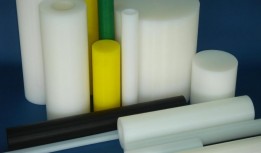
PEEK vs UHMW Machining
PEEK is a temperature-resistant engineered thermoplastic that performs well under exposure to high temperatures and chemical environments. This material’s ability to retain its physical properties and withstand temperatures up to 480 degrees F makes it a highly valuable material that is sui...Read more -
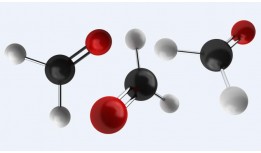
Polymer Properties – PCTFE & ETFE & ECTFE Properties
PCTFE is a semicrystalline polymer with a helical polymer chain and a pseudohexagonal crystal. PVDF and equimolar ETFE are isomers but the latter has a higher melting point and a lower dielectric loss than the former.Similar to ETFE, ECTFE terpolymers (same termonomers) have better mechanical and...Read more -
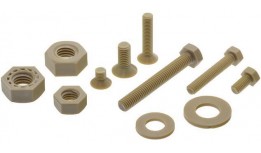
PEEK vs Polymer PTFE/FEP Maching
PEEK is a temperature-resistant engineered thermoplastic that performs well under exposure to high temperatures and chemical environments. This material’s ability to retain its physical properties and withstand temperatures up to 480 degrees F makes it a highly valuable material that is sui...Read more -
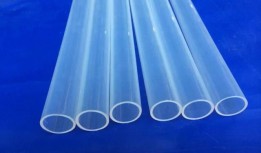
Polymer Properties – PFA Properties and FEP Properties
Chemical properties of FEP are similar to those of PTFE and PFA. PFA Properties PFA polymers are fully fluorinated and melt-processible. They have chemical resistance and thermal stability comparable to PTFE. Specific gravity of perfluoroalkoxy resins is in the range of 2.12e2.17. PFA has an uppe...Read more -
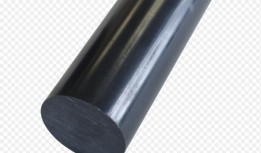
Nylatron vs Polymer PTFE/FEP Machining
Nylatron is a tradename for a family of nylon plastics, typically filled with molybdenum disulfide lubricant powder. It is used to cast plastic parts for machines, because of its mechanical properties and wear-resistance. PTFE (polytetrefluoroethylene) is a soft, low friction fluoropolymer with o...Read more -
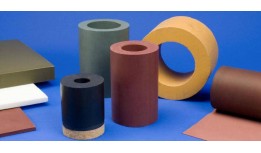
Filled PTFE Properties
The Filled grades of PTFE can be compounded & customized for specific service conditions & applications. Filled PTFE grades have specific properties improvement based on filler, type of filler & percentage of filler. Mechanical properties The compressive creep behaviour of filled PTF...Read more